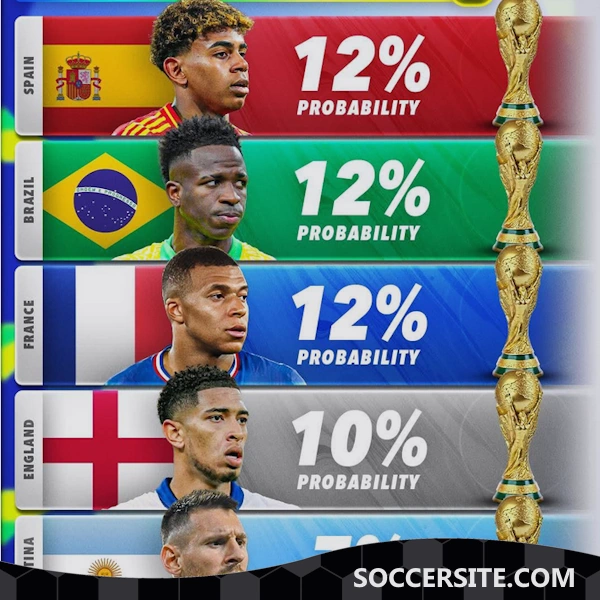

Spain’s football has evolved. The stereotype of sterile domination has given way to possession with purpose, a high-functioning counter-press, and a squad that blends world-class midfielders with incisive wide threats and versatile defenders. In tournament football - where margins are razor-thin and one decisive phase often determines a match - Spain’s ability to control tempo, protect transitions, and manufacture high-quality chances positions them among the most credible contenders. This article details the tactical framework, key personnel, set-piece edge, depth profile, risk management, and game-state competence that explain why La Roja can go all the way.
A clear identity: possession with purpose
Spain still value the ball, but the emphasis is now on progressing it through the thirds with intent. The first phase uses a calm, press-resistant base: center-backs comfortable splitting the press, a goalkeeper who can invite pressure, and a pivot who creates the extra man. From there, Spain seek midfield superiority, using third-man combinations and underlapping fullbacks to break lines rather than circulate endlessly. The goal is to move opponents, create interior receiving angles between lines, and reach the final third with numbers already in optimal structure to counter-press if possession is lost. This identity reduces volatility, starves opponents of transition opportunities, and allows Spain to play the match largely on their own terms.
The midfield engine: control, creation, and counter-press
La Roja’s competitive edge is their midfield. With a conductor at the base - capable of screening, switching play, and killing counters through angles - Spain pair two interiors who can both resist pressure and accelerate play. Pedri’s body orientation and third-man timing open pockets that most teams can’t access; a complementary runner (or dribbler) attacks those pockets to create cut-backs and late box entries. Because these players rarely lose the ball in dangerous zones, Spain’s counter-press is triggered from advantageous spacing: immediate pressure on the receiver, cover behind the ball, and wide traps that funnel opponents into touch. Tournaments reward teams who turn defensive phases into short bursts; Spain’s midfield does that almost by default.
Pressing structure that travels
Spain press high with clarity. Triggers include slow lateral passes across the back line, a rival pivot receiving on the half-turn, or a fullback trapped near the touchline. The nine curves the press to block the return pass, a near-side interior jumps the pivot, and the ball-side fullback steps aggressively with cover from the center-backs. If the press is beaten, Spain drop into a compact mid-block with staggering that denies central progression and invites low-percentage crosses. This duality proactive high press plus organized retreat means they can adapt match plans to opponent strengths without losing identity.
Chance creation: from sterile control to real incision
Creating clear chances against elite tournament blocks is hard. Spain address this with three repeatable patterns. First, half-space overloads leading to cut-backs: the winger occupies width, the interior receives between lines, and the overlapping fullback pulls the far fullback deep, opening the pull-back lane to the penalty spot. Second, early diagonals into channel runs when the nine drops and a wide forward darts inside the fullback. Third, quick switches after central fixation: draw numbers to one side, then whip a flat cross to a back-post runner attacking the blind shoulder. Each pattern is trained and scalable, producing shots from the “gold zones” rather than hopeful crosses.
Set-pieces: quiet, repeatable edges
Tournament matches frequently hinge on dead balls. Spain’s delivery is consistent, and the routines are varied: inswingers to crowd the six-yard line with a screen on the goalkeeper; outswingers to the penalty spot for late runners; short corners to force a defender out of the line before a second-phase cross attacks the vacated channel. Defensively, Spain use a hybrid scheme zonal spine plus man-tags on primary targets minimizing free runs. Over seven matches, a two or three corner swing can be the difference between a quarter-final exit and a final appearance.
Versatile fullbacks and progressive center-backs
Spain’s back line is built for modern football. Center-backs can defend large spaces and break lines with crisp passing; they’re comfortable stepping into midfield to maintain pressure on the ball, which sustains attacks and compresses the pitch. The fullbacks are role-flexible: they can underlap into midfield to create a box shape in build-up, or overlap wide to pin a back five. That flexibility prevents predictability and allows Spain to target specific opponent weaknesses narrow midfields get stretched wide; passive blocks get pulled apart with overloads inside.
Multiple paths to a goal
Spain are not overly reliant on one scorer. They spread output via late arrivals from midfield, near-post runs from the nine, and back-post attacks from the far winger. This distribution matters in tournaments because opponents design bespoke plans to erase a single star; Spain’s multi-source threat makes those plans less effective. Additionally, the squad’s wide forwards can both dribble and combine, meaning Spain can break a game open with individual quality or collective patterns depending on game state.
Game-state mastery: leading, chasing, and closing
Good teams look good at 0–0; champions manage the minutes after goals. When leading, Spain excel at freezing the tempo without ceding field position circulating just fast enough to avoid traps and keeping rest defense in place to smother counters. When chasing, the bench provides verticality and direct running to raise shot volume without losing structure. In the final 15 minutes, Spain’s ability to foul intelligently outside the dangerous central zone and to defend the box with numbers has improved, turning late chaos into controlled endings.
Depth and rotation for a seven-match sprint
World Cups are won by squads, not XIs. Spain can rotate like-for-like in key roles: a second press-resistant interior to maintain control games, an alternate winger profile for direct 1v1 threat, a second pivot if the match requires more protection, and fresh fullbacks to keep width and running power. This rotation capacity preserves intensity across group and knockout rounds, reduces injury risk, and maintains the pressing triggers that underpin Spain’s identity.
Analytics signals that back the case
Tournament predictors tend to favor teams that post strong shot-quality differentials, suppress opponent counters, and generate repeatable chances from cut-backs and set-pieces. Spain tick those boxes. Their field-tilt (share of final-third touches) consistently trends high against quality opposition, a leading indicator of territorial control. Their passes per defensive action against them (PPDA conceded) remain low, suggesting opponents struggle to advance the ball into dangerous zones. Combine that with a low xG per shot allowed, and you get a profile built for knockout reliability.
Risks and why they’re manageable
Every contender has vulnerabilities. Spain’s traditional concern is converting dominance into goals against deep, low-block teams. The mitigations are already in the model: quicker tempo in the final third, earlier crosses to surprise set blocks, and more aggressive box occupation from the weak-side winger. Another risk is defending the wide transition if the pivot is pulled out; Spain address this with a rest-defense triangle - one fullback stays, the far-side center-back tucks across, and the pivot holds the central lane. Finally, penalties loom in tournament football: Spain’s recent emphasis on varied run-ups and keeper scouting reduces variance when matches reach the spot.
How Spain win the tournament: the roadmap
The blueprint is simple, if not easy: control the center with the pivot and interiors, trap wide on Spain’s terms, and turn regained balls into immediate advantage - either a fast diagonal into a winger’s run or a short burst of combinations ending in a cut-back. Protect transitions with disciplined rest defense, maintain set-piece variety, and use bench speed to change game texture at 60–70 minutes. If Spain reach the last four with freshness intact, their control profile and set-piece discipline give them multiple win conditions against any opponent style—transitional, deep-block, or possession-heavy.
Conclusion
Spain’s case as World Cup winners rests on more than nostalgia or reputation. It is grounded in a coherent, modern game model; an elite midfield that turns pressure into poise; a pressing scheme that travels; and a deep, flexible squad capable of solving different match problems without losing identity. In tournament football, reliability beats romance - and La Roja now possess both. If they execute their patterns, protect their transitions, and keep their set-piece edge, Spain have every tool required to lift the trophy.