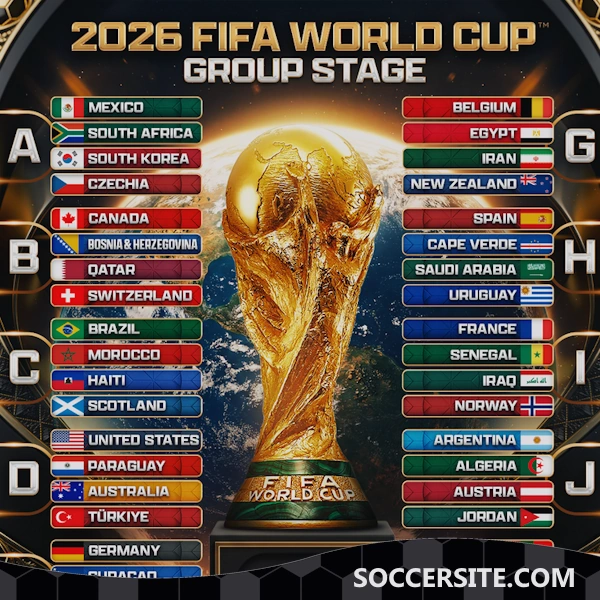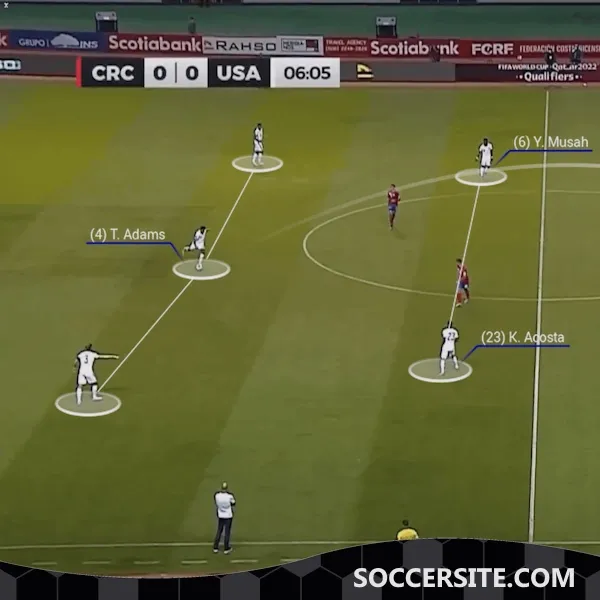
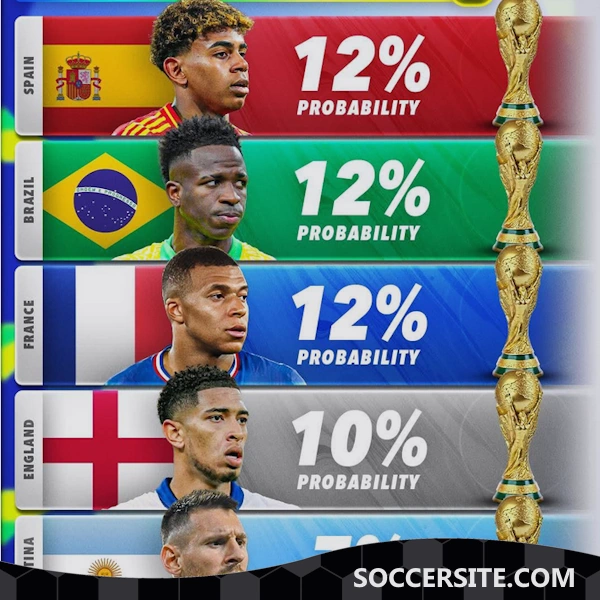
This World Cup Power Index ranks 32 national teams across five pillars: squad talent, tactical clarity, depth and injuries, big-game pedigree, and recent form against top-20 opposition. It’s designed as a publication-ready piece you can update as squads, injuries, and warm-up results shift. Use it as both a snapshot of who’s strongest right now and a practical guide to where each side can be exploited on the biggest stage.
Methodology (What This Index Measures)
Each team is scored across: 1) elite talent at match-deciding positions (GK, CB, 9/10), 2) tactical identity (pressing triggers, rest defense, set-piece schemes), 3) bench quality and role coverage, 4) knockout-game resilience (penalties, game-state management), and 5) results versus top-20 sides over the last 18 months. The rankings are then tiered to reflect realistic ceiling outcomes: champions, finalists, semi-finalists, or knockout fodder. Let’s dive in.
Tier 1 — Title Favorites
1) Argentina
Best-in-class game management, elite shot prevention, and a frontline that turns half-chances into goals. Their set-piece threat and penalty composure make them the most reliable late-game outfit. Weak spot: defending wide isolations if the pivot is dragged away.
2) France
Outrageous depth at every line, vertical speed in transition, and enough aerial power to decide tight ties from dead balls. If the midfield balance is right, they can play on the front foot or counter at will. Watch for space behind advanced fullbacks.
3) England
Versatile front five, premium set-piece designs, and a center-back unit comfortable defending space. When the double pivot controls tempo, they look unbreakable. The question is late-game risk management versus elite counters.
4) Brazil
1v1 demons in attack and a conveyor belt of ball-winning midfielders. At their best, they suffocate build-up and live in your final third. Finishing variance and defensive rest shape after turnovers remain swing factors.
5) Spain
Possession with purpose is back: press-resistant midfield, aggressive counter-press, and overlapping width. Need ruthlessness in the box; otherwise they dominate xG without killing ties. Transition defense is vastly improved.
Tier 2 — Inner Circle Contenders
6) Portugal
Loaded squad, flexible shapes (4-3-3/4-2-3-1), and enough veterans to navigate chaos. They win through control or moments. Best when the press is coordinated; vulnerable if lines get stretched.
7) Germany
High ceiling at home or away: fluid rotations, technical midfielders, and center-backs comfortable stepping in. If rest defense is tidy, they can out-chance anyone. Question: consistency against athletic transitions.
8) Netherlands
Elite defensive spine and a well-drilled pressing structure. They strangle entries, then punish via cutbacks. Need a cold-blooded finisher to convert territorial dominance into scoreboard pressure.
9) Uruguay
New-school intensity with old-school bite. Ball-winning sixes, direct wide threats, and a set-piece edge. Can grind or fly. Risk: discipline and foul management in VAR era.
10) Croatia
Midfield control merchants. They drag you into long games, then beat you on details. Less vertical punch than tier-one sides, but they rarely beat themselves.
Tier 3 — Quarter-Final Ceiling (with Semi Upside)
11) Belgium
Still stacked in chance creation when the main creators are fit. If the high line is protected by a diligent pivot, they look top-eight. Vulnerable to pace through channels.
12) Italy
Compactness, pattern play, and set-piece variation keep them competitive in any tie. The trade-off is goals from open play; they rely on efficiency over volume.
13) Denmark
Coaching clarity, cohesive press, and slick rehearsed routines from corners and throw-ins. Lack of elite finishing margins separates them from the inner circle.
14) Morocco
World-class fullbacks, disciplined blocks, and transition venom. They thrive in big-stadium energy and punish mistakes. Need more box occupation versus deep blocks.
15) Japan
Relentless off-ball work, quick combination play, and a deep winger pool. They tilt fields with pressure; finishing variance decides their ceiling.
16) United States
Athletic, press-resistant core and improving set-piece delivery. When the 6 is tidy in build-up, they create clean lanes. Must sharpen chance conversion against top-10 defenses.
Tier 4 — Solid Knockout Sides
17) Mexico
Mid-block control, smart rotations wide, and historically clutch keepers. Final-third punch and defending the back post are the two swing metrics.
18) Colombia
Wingers who win duels and a box striker who attacks space—classic KO formula. Transition defense and discipline against quick restarts are key.
19) Senegal
Physical back line, aerial superiority, and breakaway speed. If the 10 spot supplies final-ball quality, they can bully top sides.
20) Switzerland
Low-error football. Elite in game-state control, penalties, and throw-in patterns. Ceiling capped by chance volume, not structure.
21) Serbia
Cross volume plus aerial finishing equals danger, especially late. Can be out-pressed if the double pivot is isolated.
22) Poland
Set-piece edge and a target-man blueprint that travels well. Build-up can stall under high pressure; must lean into second-ball plans.
23) South Korea
Pace, discipline, and clever counters. Shot quality is fine; shot volume against elite blocks is the limiter.
24) Nigeria
Explosive in space with forwards who attack the penalty spot. The hinge is defensive spacing between CBs and the 6 on turnovers.
Tier 5 — Round-of-16 Aspirants / Giant-Killers
25) Ecuador
Underrated press, young legs, and dangerous wide-to-box patterns. Struggle when forced to make the play against set defenses.
26) Austria
Aggressive counter-pressing identity that upsets rhythm teams. Need cleaner final-ball craft to sustain pressure.
27) Ukraine
Technically strong midfield and brave progression through pressure. Depth in central defense determines their knockout fate.
28) Turkey
Volatile but dangerous: when the press lands, they look tier-three; when it doesn’t, they leak transitions. Set-pieces can save them.
29) Algeria
Wide creativity and set-piece guile keep them alive in tight games. Defensive discipline against switches is the concern.
30) Iran
Compact, tactically obedient, and punchy on counters. Shot creation from settled possession remains the bottleneck.
31) Australia
Well-drilled, resilient blocks and long-throw/set-piece nuisances. Talent gap up front limits upside against top-12 teams.
32) Scotland
Wing-back platforms, spirit, and structure make them awkward opponents. Box presence and chance conversion versus elite backlines define the ceiling.
How To Use This Index (Editors’ Notes)
For match previews, reference each team’s tier and identify the two leverage points most likely to swing the tie: set-pieces, rest defense, or transition speed. As squad news changes, update the “Depth and Injuries” pillar first—it moves teams more than any other variable. In knockout brackets, bump teams with proven penalty keepers and rehearsed shootout routines by one mini-tier.
Five Match-Up Traps To Watch
1) Aerial mismatch: crossing sides (Serbia, Poland) versus short fullbacks. 2) Second-phase corners: teams with back-post overloads (England, Portugal). 3) Rest-defense gaps: possession teams versus elite sprinters (Brazil, France). 4) Throw-ins as set-pieces (Denmark, Switzerland). 5) Late-game substitutions that flip pressing intensity (Japan, USA).
Closing Thoughts
Power rankings aren’t prophecy—they’re a map of probabilities. What separates champions is how they handle the 15 minutes after scoring, the five minutes after conceding, and every dead ball in between. Use this index to spot where ties will really be won: the pivots who control transition, the center-backs who keep rest defense honest, and the set-piece scripts that turn stalemates into history.