The UEFA Champions League has produced some of the greatest teams, players, and individual performances in football history, but every successful side also needs leadership. Captaining a team in Europe’s most prestigious club competition involves much more than wearing an armband. The best captains manage pressure, represent their clubs, organize teammates during difficult moments, and often deliver decisive performances when the stakes are at their highest. Since the Champions League era began in 1992/93, several legendary players have lifted the trophy as captain and created moments that remain part of football history. Ranking them is inevitably subjective, but achievements, leadership, longevity, influence, and performances in decisive matches all help identify the captains who left the strongest mark on the competition.
Sergio Ramos
Sergio Ramos has one of the strongest claims to being the greatest captain of the modern Champions League era. Real Madrid appointed him captain following the departure of Iker Casillas, and Ramos subsequently led the club to three consecutive Champions League titles in 2016, 2017, and 2018.
That achievement alone places him in extraordinary company. Real Madrid became the first club to successfully defend the trophy in the Champions League era and then went one step further by winning it for a third consecutive season. Ramos was the emotional and defensive leader throughout that run.
His Champions League legacy had already been established before becoming captain. In the 2014 final against Atletico Madrid, Ramos scored the famous stoppage-time equalizer that forced extra time before Real Madrid eventually won 4-1. His ability to produce goals from set-pieces, defend aggressively, and thrive under enormous pressure made him a unique captain. Few defenders have influenced decisive Champions League moments as frequently as Ramos.
Paolo Maldini
Paolo Maldini represents almost everything associated with elite European football: longevity, professionalism, tactical intelligence, technical quality, and leadership. The Italian defender spent his entire senior career with AC Milan and competed at the highest level across multiple generations.
Maldini captained Milan to Champions League glory in 2003 and again in 2007. The first triumph carried special historical significance because his father, Cesare Maldini, had also lifted the European Cup as Milan captain exactly 40 years earlier.
By the time Maldini lifted the trophy again in Athens in 2007, he had already become one of the defining figures of European football. He had experienced victories and painful defeats, including Milan’s dramatic loss to Liverpool in the 2005 final. His ability to return two years later and captain Milan to victory against the same opponent demonstrated the resilience that characterized his career. Maldini was never the loudest type of leader, but his consistency and professionalism gave him enormous authority.
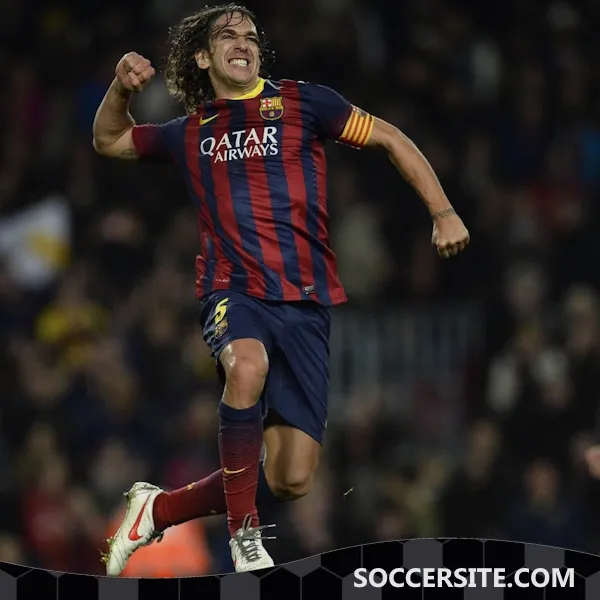
Carles Puyol
Carles Puyol was the heart of one of the greatest Barcelona teams ever assembled. He became club captain during the 2000s and represented the intensity, loyalty, and defensive commitment that balanced Barcelona’s extraordinary attacking talent.
Puyol captained Barcelona to the Champions League title in 2006 and again in 2009. He was also the club captain when Barcelona won the competition in 2011. During the trophy ceremony at Wembley, Puyol famously allowed Eric Abidal, who had recently returned after treatment for a liver tumor, to wear the armband and lift the trophy first. It was a gesture that perfectly demonstrated the kind of leadership Puyol provided.
On the pitch, he was aggressive without being careless, excellent in one-on-one situations, and prepared to sacrifice himself for the team. Barcelona possessed more technically gifted footballers, but few were more important to the mentality of the group. His leadership helped connect the Ronaldinho era with the Guardiola era and gave Barcelona stability during a period of extraordinary success.
Steven Gerrard
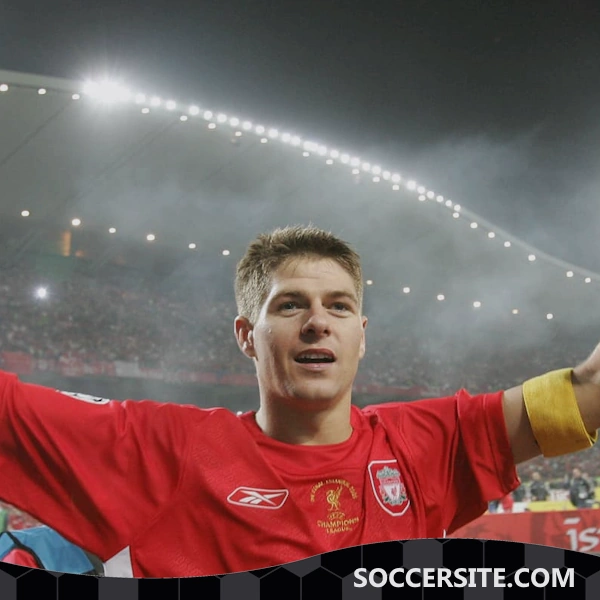
Steven Gerrard’s place among the greatest Champions League captains is built largely around one unforgettable night in Istanbul. Liverpool faced AC Milan in the 2005 final and went into half-time trailing 3-0 against one of the strongest teams in Europe.
Gerrard began the comeback by scoring Liverpool’s first goal early in the second half. Vladimir Smicer and Xabi Alonso then completed an extraordinary six-minute recovery to make it 3-3. Liverpool survived extra time before winning the penalty shootout, allowing Gerrard to lift the Champions League trophy as captain.
His influence during the entire campaign was equally important. In the final group match against Olympiacos, Liverpool needed to win by two goals to progress. Gerrard scored a spectacular late goal to secure the required 3-1 victory. Those performances created the image of Gerrard as a captain capable of changing matches through determination and individual quality. The 2005 campaign remains one of the strongest examples of a captain dragging his team through difficult moments.
Philipp Lahm
Philipp Lahm captained Bayern Munich during one of the greatest seasons in the club’s history. Bayern had experienced significant disappointment in the Champions League before 2013, losing the final to Inter in 2010 and then suffering an especially painful defeat against Chelsea in Munich in 2012.
Instead of allowing those defeats to damage the team permanently, Bayern responded by producing an extraordinary 2012/13 campaign. Lahm captained the side that defeated Borussia Dortmund 2-1 at Wembley in the final and completed a historic treble of the Bundesliga, German Cup, and Champions League.
Lahm’s leadership style was based on intelligence and consistency rather than confrontation. He could play on either side of defense and later successfully moved into midfield under Pep Guardiola. His understanding of positioning made him one of the most tactically intelligent footballers of his generation. As captain, he represented a Bayern side that combined technical quality with relentless professionalism.
Javier Zanetti
Javier Zanetti’s longevity at Inter Milan made him one of the strongest symbols of the club. After joining Inter in 1995, he eventually became captain and remained a central figure through periods of frustration before finally reaching the highest point of European football.
In 2010, Zanetti captained Jose Mourinho’s Inter to Champions League glory as part of an historic treble. Inter eliminated Barcelona in the semi-finals before defeating Bayern Munich 2-0 in the final in Madrid.
Zanetti’s importance extended beyond technical ability. He could perform in several positions, rarely missed matches, and maintained remarkable physical standards throughout his career. By the time he lifted the Champions League trophy, he had spent 15 years with Inter. That made the victory particularly meaningful and established him as one of the competition’s most respected captains.
Iker Casillas
Iker Casillas was already a Champions League winner long before becoming Real Madrid captain, but his defining moment with the armband came in 2014. Real Madrid had spent years pursuing La Decima, the club’s long-awaited tenth European Cup.
Casillas captained the team in the Lisbon final against Atletico Madrid. Real appeared close to defeat until Sergio Ramos equalized deep into stoppage time. Carlo Ancelotti’s team then dominated extra time to win 4-1, allowing Casillas to lift the trophy.
His career in the competition had begun much earlier. Casillas played a decisive role as a young substitute in the 2002 final against Bayer Leverkusen, producing crucial saves after replacing the injured Cesar Sanchez. By 2014, he had evolved from talented young goalkeeper into club captain. His longevity across different Real Madrid eras makes him one of the most important Champions League leaders.
Frank Lampard
Frank Lampard’s captaincy in the 2012 Champions League final came under unusual circumstances. John Terry was Chelsea’s regular club captain but was suspended for the final against Bayern Munich, meaning Lampard wore the armband in Germany.
Chelsea faced Bayern in their own stadium and spent long periods under pressure. Thomas Muller eventually gave Bayern the lead, but Didier Drogba equalized late in normal time. Petr Cech then saved Arjen Robben’s penalty during extra time before Chelsea won the shootout.
Lampard converted his own penalty and lifted the trophy after captaining Chelsea to the first European Cup in the club’s history. His role throughout the era was much larger than one match. He had been one of Chelsea’s most important players for more than a decade and had also scored in the 2008 Champions League final against Manchester United. His 2012 triumph provided a fitting reward for years of consistency at the highest level.
Fernando Hierro
Fernando Hierro combined defensive authority with an unusual goalscoring ability and became one of Real Madrid’s major leaders during the first decade of the Champions League era.
Real Madrid returned to the top of European football in 1998 after a long wait and won the Champions League again in 2000. Hierro then captained the club to another title in 2002, when Real defeated Bayer Leverkusen 2-1 at Hampden Park.
That final is remembered primarily for Zinedine Zidane’s extraordinary volley, but Hierro’s leadership was equally important to the identity of the team. His ability to play as a central defender or defensive midfielder, combined with his experience and personality, made him one of the defining Real Madrid captains of his generation.
Didier Deschamps
Didier Deschamps holds a special place in Champions League history because he captained Marseille to victory in the first season played under the UEFA Champions League name. In 1993, Marseille defeated AC Milan 1-0 in the final in Munich.
Deschamps was still only in his twenties, but he already possessed the tactical discipline and leadership qualities that would later define his career as both a player and manager. Marseille’s victory remains unique because they are still the only French club to have won the European Cup or Champions League.
As the captain who lifted the trophy in the inaugural Champions League season, Deschamps will always occupy an important historical position in the competition.
Jordan Henderson
Jordan Henderson’s development at Liverpool is another example of how leadership can grow over time. Initially questioned after arriving at the club, he eventually became captain and played a central role in Jurgen Klopp’s transformation of Liverpool into one of Europe’s strongest teams.
Liverpool lost the 2018 Champions League final to Real Madrid but returned a year later. After producing a remarkable semi-final comeback against Barcelona, Liverpool defeated Tottenham Hotspur 2-0 in Madrid to win the 2019 final.
Henderson became the Liverpool captain who lifted the European Cup for the sixth time in club history. His work rate, tactical discipline, and ability to set standards within the squad made him a crucial figure in Klopp’s team even when more creative players attracted greater attention.
What Makes a Great Champions League Captain?
There is no single model of leadership. Ramos led through aggression, personality, and decisive interventions. Maldini relied on authority and consistency. Gerrard produced moments of inspiration when Liverpool appeared beaten. Lahm led through intelligence and professionalism, while Puyol combined sacrifice with emotional intensity.
The Champions League magnifies leadership because mistakes become more costly as the competition progresses. A captain must handle difficult away matches, tactical changes, setbacks, extra time, penalty shootouts, and the enormous pressure surrounding the final. The greatest captains are usually those who make their teammates calmer rather than simply making themselves more visible.
Final Thoughts
Sergio Ramos has perhaps the strongest claim to being the greatest captain of the Champions League era because he captained Real Madrid to three consecutive titles from 2016 to 2018. Paolo Maldini’s longevity and two triumphs as Milan captain provide an equally powerful argument, while Carles Puyol helped lead one of the greatest Barcelona generations in history.
Steven Gerrard, Philipp Lahm, Javier Zanetti, Iker Casillas, Frank Lampard, Fernando Hierro, Didier Deschamps, and Jordan Henderson each represent different forms of leadership. Some dominated for years, others became immortal through one extraordinary campaign, but all demonstrated the same fundamental quality: when the pressure of Champions League football reached its highest level, their teams trusted them to lead.