Every World Cup develops its own football identity. Some tournaments are remembered for a dominant champion, some for a tactical revolution, and others for the way underdogs forced the strongest teams to adapt. This World Cup is already showing signs of becoming a tournament defined less by one universal style and more by flexibility. Instead of one clear tactical school taking over, the early matches suggest a more varied picture, where teams are choosing different ways to solve the same problems. That makes this World Cup especially interesting from a tactical point of view, because it is rewarding adaptability, discipline, and intelligent game management just as much as raw talent.
What stands out most is that international football still behaves differently from club football. National teams do not have the same amount of time to rehearse complex structures, so what succeeds tends to be what can be repeated clearly under pressure. That is why certain themes are becoming more visible in this tournament: compact defending, selective pressing, fast transitions, wide attacking duels, and careful physical management. The teams that understand these trends best are likely to gain a serious edge as the competition moves deeper into the knockout rounds.
Compact low blocks are once again a major weapon
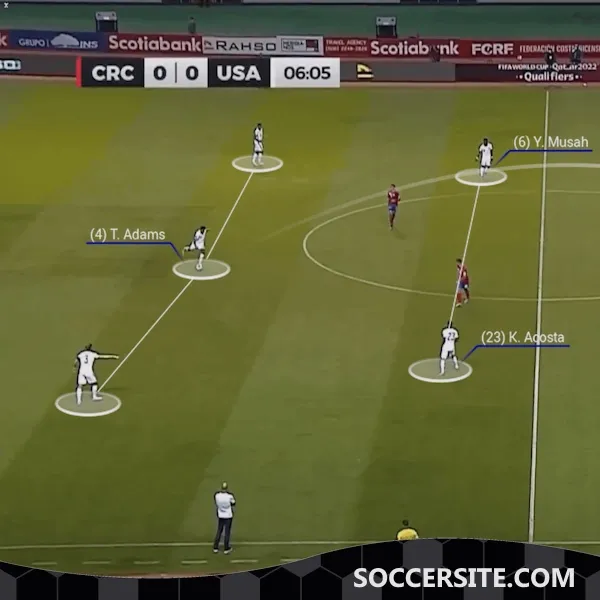
One of the clearest trends in this World Cup is the return of the low block as a highly effective tournament tool. When stronger teams dominate the ball, more opponents are choosing not to fight for possession in dangerous areas but instead to protect central spaces, keep distances short, and force attacks toward lower-value zones. This is not passive football in the old sense. The best low blocks are active, coordinated, and designed to control the match without the ball.
That kind of defending has already shown how powerful it can be. The most successful teams using this approach do not simply park bodies in front of goal. They defend with structure, patience, and emotional discipline. They stay narrow when the ball is central, shuffle as a unit, and avoid giving away cheap fouls. Against technically superior opponents, that can become a powerful equalizer. It also has a psychological effect. When a favorite dominates possession but fails to create clear openings, frustration grows, rushed decisions follow, and the underdog’s belief increases.
This trend matters because knockout football is often decided by patience. A team that can defend well for long periods without losing concentration can stay alive long enough for one set-piece, one counter, or one mistake to change everything. That makes the compact low block one of the most important tactical themes of this World Cup.
Selective pressing is replacing constant pressing
High pressing remains part of elite football, but this tournament is showing that nonstop pressing for 90 minutes is not always realistic in international competition. The physical demands are too high, preparation time is too limited, and opponents are too varied. Instead, the more successful teams are pressing in controlled bursts.
This means waiting for clear triggers. A slow lateral pass across the back line, a poor first touch, a receiver facing his own goal, or a fullback trapped near the touchline can all become moments to spring the press. Outside those moments, many teams are content to sit in a more compact shape and conserve energy. That approach makes sense in tournament football, where freshness matters and players need to stay mentally sharp across several matches in a short period.
Selective pressing also reduces risk. A failed full-pitch press can open huge spaces behind the first line, and in a World Cup that can be fatal. Teams that press at the right moments, rather than all the time, often look more balanced. They create turnovers in useful zones without leaving themselves exposed every time the first wave is beaten.
Transition football remains brutally effective
No matter how the game evolves, transition football keeps its place as one of the most dangerous weapons in international tournaments. Teams can spend long stretches defending or circulating possession, but the match often changes in the few seconds after the ball is won. That is when shape is broken, distances are unstable, and players must make fast decisions under pressure.
This World Cup is reinforcing that reality. Many teams appear comfortable defending deeper because they know the real opportunity may come after the regain. Instead of treating defending as survival, they treat it as preparation for the first forward pass. Once the ball is won, the objective is to attack before the opponent can reorganize. That may mean a direct pass into the channel, a diagonal ball into a winger’s run, or a quick vertical combination through midfield.
Transition football is particularly important in international tournaments because it rewards clarity. A team does not need twenty rehearsed patterns to become dangerous in transition. It needs compact defending, runners with timing, and players who can recognize the moment to accelerate. That makes this trend especially dangerous in a World Cup setting.
Wide 1v1 situations are becoming more valuable
As central areas grow more crowded and more carefully protected, the wings are becoming increasingly important. This World Cup is likely to reward teams that can isolate defenders out wide and create danger through dribbling, overlapping runs, and fast switches of play.
The logic is simple. Most compact defensive systems are built to close the middle first. That makes central access more difficult, especially against disciplined opponents. To break those structures, teams often need one player who can force movement from the outside. A winger who beats his marker can pull a second defender across, open the half-space, or create a cut-back lane. A fullback who overlaps at the right time can stretch the block and force choices that defenders do not want to make.
This does not mean the game is returning to old-fashioned wing play. It means width is becoming a tool for destabilizing modern compact structures. The teams with explosive wingers, intelligent fullbacks, and accurate crossers or cut-back creators may benefit significantly as the tournament progresses.
Set-pieces still matter, but not in the same way as club football
Set-pieces always matter in tournaments because margins are so fine. One corner, one free-kick, or one long throw can change a knockout tie. But this World Cup may show a slightly different type of set-piece importance from what fans now see in club football.
At club level, some teams spend months building highly specialized routines with layers of screens, blocks, disguised movements, and second-phase patterns. National teams usually do not get that amount of preparation time. Because of that, international set-piece success often comes more from quality delivery, timing, physical presence, and second-ball reactions than from highly elaborate design.
That means set-pieces will still be important, but probably in a more direct and practical way. Teams with excellent dead-ball delivery and strong aerial targets can still gain a decisive edge. What is less likely is a tournament defined by the same level of set-piece sophistication seen in top club football over the past year.
Hydration breaks could shape match rhythm more than expected
One of the most unusual tactical elements in this World Cup is not linked to formation or player roles, but to climate management. The mandatory hydration breaks may look like a simple welfare measure, but they can have real tactical consequences. Any scheduled stoppage gives coaches a brief chance to reset the team, correct positioning, calm the tempo, or prepare for the next phase of the game.
That changes rhythm. Teams may begin to think in shorter bursts, using intense periods of pressing or possession before the break, then reorganizing afterwards. The pauses can also help underdogs who are spending long periods without the ball, because they offer physical and emotional relief. For stronger teams, they may interrupt momentum just when pressure is building.
Even if these breaks were introduced for practical reasons, they may become an important tactical detail in how matches unfold. In a World Cup where small edges matter, even the shape of the match clock can influence outcomes.
Defensive cleanliness is becoming a hidden advantage
Another trend to expect is the value of disciplined, foul-light defending. In international football, giving away too many set-pieces around the box is often fatal. Teams that stay compact, delay intelligently, and defend without panic reduce that risk. They also avoid losing emotional control in difficult moments.
This kind of defensive cleanliness is not always celebrated, but it can be one of the most valuable tournament skills. A side that stays organized, avoids reckless challenges, and forces opponents into rushed shots is often much more dangerous than it looks. The best defensive teams do not only stop attacks. They shape where those attacks happen and what kind of shots they allow.
Final thoughts
The biggest tactical trend of this World Cup may actually be tactical diversity. So far, the competition is not pointing toward one dominant football ideology. Instead, it is rewarding teams that can defend compactly, press at the right moments, strike in transition, attack intelligently from wide areas, manage set-pieces efficiently, and adapt to unusual conditions such as hydration breaks.
That is what makes this tournament so interesting. It feels less like a World Cup defined by a fashionable system and more like one defined by decision-making. The smartest teams, not just the most glamorous ones, may be the sides that go deepest. In tournament football, that is often the difference between playing well and actually winning.